Decision Matrix
Choose the right lane
Use this as a quick navigation board: scan each fight or build decision, then jump to the full breakdown and source frames below.
The one-button rule
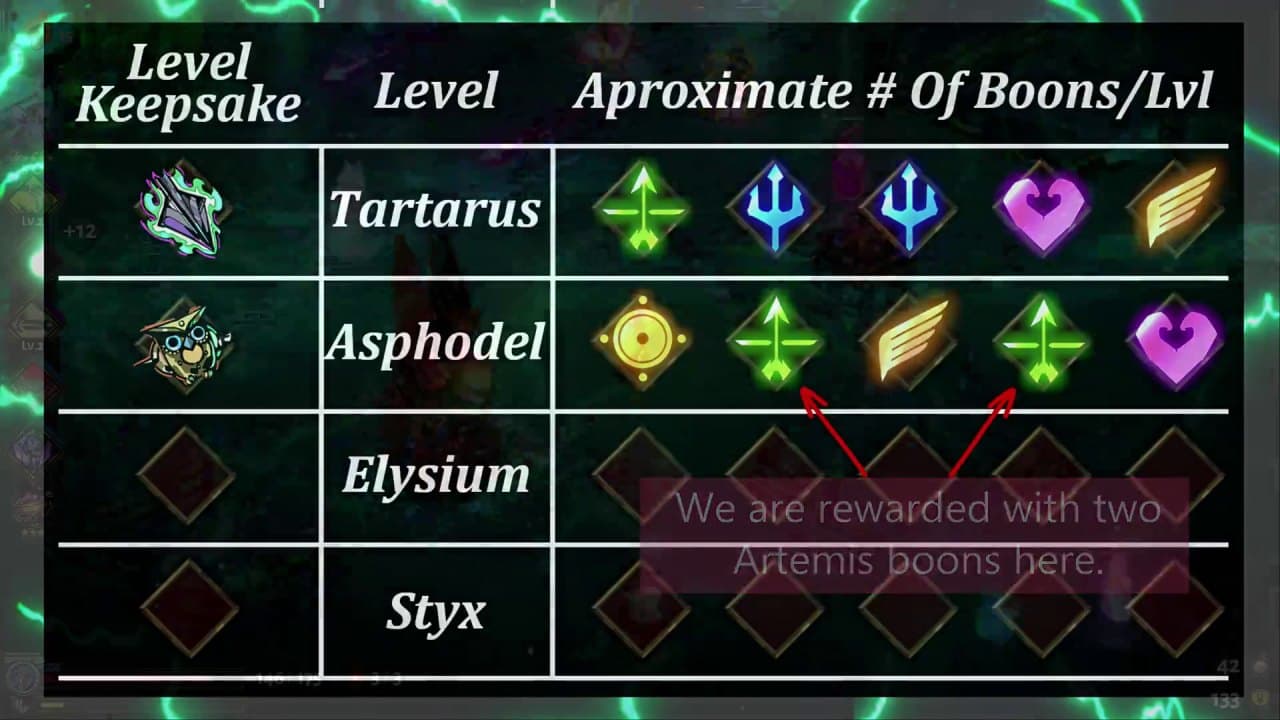
Most confused builds are trying to make every button equally important. Instead, let the weapon tell you the job. Chiron Bow wants Special scaling. Achilles Spear often wants Cast burst. Hestia Rail wants empowered shots. Once the main button is chosen, other boons should either protect you, apply a needed status, or unlock a clear duo path.
God pool control
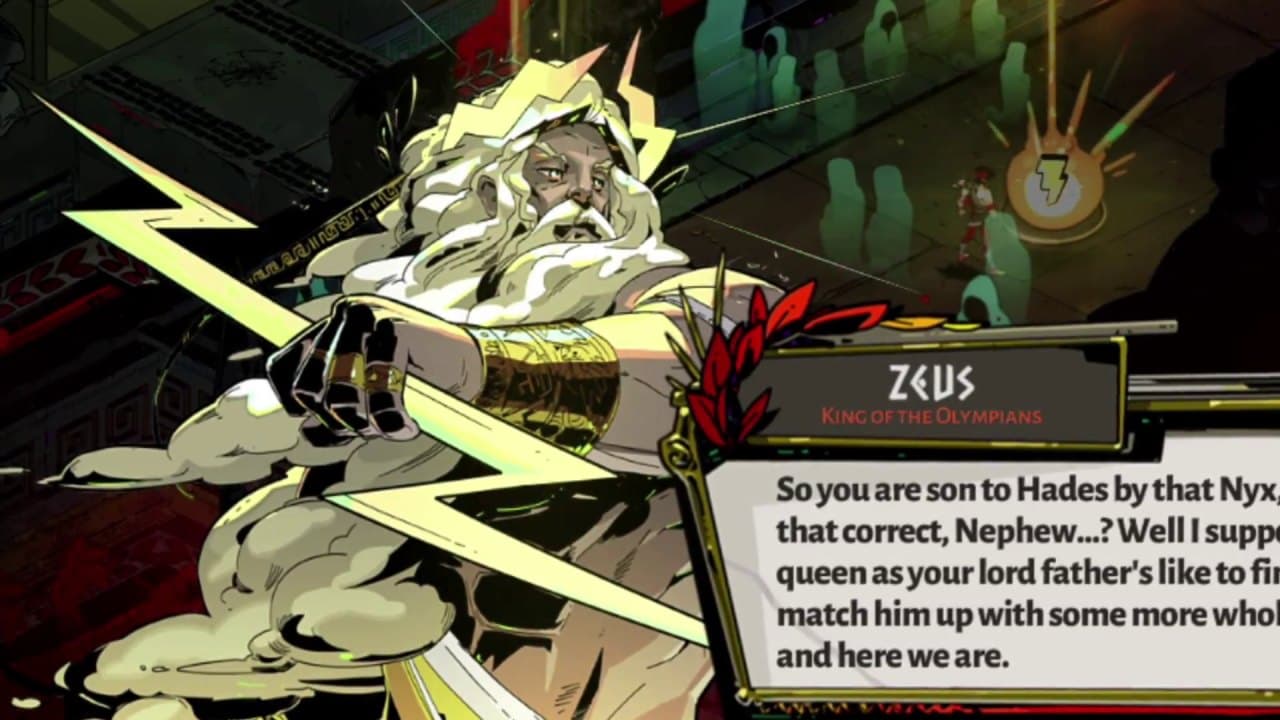
God keepsakes are powerful because Hades build planning is partly about reducing randomness. Starting with Athena for Dash, Artemis for crit, Zeus for multi-hit lightning, Dionysus for Hangover, or Aphrodite for strong attack scaling can define the run before chamber five.
Start with the damage carrier
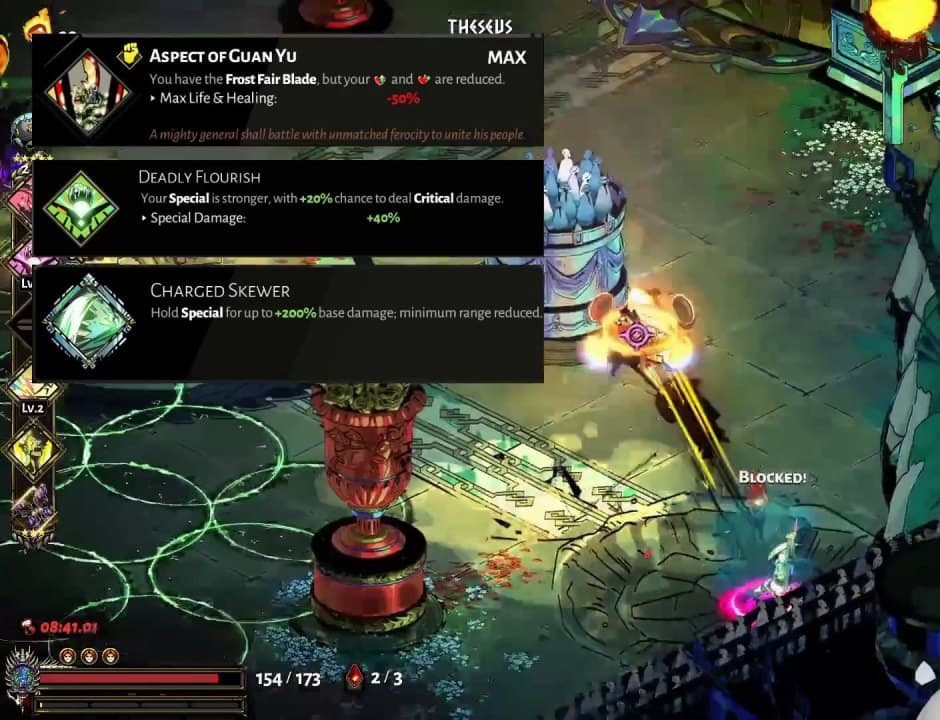
Before accepting the first tempting boon, decide which button is allowed to win the run. Attack builds want frequent clean hits, Special builds want focused delivery, Cast builds want setup and burst, and revenge or status builds need time to stack value. Once the carrier is chosen, every later boon should either scale it, protect it, or unlock a specific Duo route.
Use keepsakes as routing tools
God keepsakes are not only a way to see a favorite Olympian. They turn a random run into a plan. Open with the god that defines the damage carrier, then swap later if the run needs survival, money, or boss insurance. The strongest build pages all share the same habit: they reduce uncertainty before spending rerolls.
When to ignore a “good” boon
A boon can be strong and still be wrong for the run. Skip it when it steals a core slot, adds a second unrelated damage plan, or asks for prerequisites you cannot realistically finish. In Hades, coherence beats decoration: a plain boon that completes your route is often better than an Epic boon that points somewhere else.
Quick Verdict
A good Hades build starts by deciding which button deals damage. Then you pick gods that scale that button, use keepsakes to control the first god, and avoid taking shiny boons that do not help the run’s core job.
Pick one primary damage button: attack, special, cast, or call.
Use god keepsakes to open with a god that supports that button.
Take utility boons only after core damage and survival are covered.
Pre-Run Checklist
How to test Hades Boon and Build Planning Guide in the next run
A clean build rejects tempting boons that do not support its route.
Plan
Compress Hades Boon and Build Planning Guide into one next-run plan
Pick one primary damage button: attack, special, cast, or call.
Check
The one-button rule
Test
Change one variable so the test means something
Pick one primary damage button: attack, special, cast, or call.
Check
Next read: Best Hades Weapon Aspects for Consistent Clears
Review
After failure, identify the most expensive mistake
Taking every Pom target instead of upgrading the actual damage boon.
Check
Next read: Eternal Spear
Player Intent Router
Choose the section that matches your current wall
High-retention guide pages do not force every player to read linearly. They help the player name the problem, act on it, then continue into the next useful page.
01 · Fast route
You want to turn Hades Boon and Build Planning Guide into the next run plan
The first job of a guide page is reducing hesitation. Take one route you can execute instead of trying to memorize the whole database.
Page action
Pick one primary damage button: attack, special, cast, or call.
02 · Decision point
You are choosing between several good-looking options
Choose the option that solves the current wall. Rarity, tier-list strength, and flashy clips should come after the run problem.
Page action
Pick one primary damage button: attack, special, cast, or call.
03 · Review loop
You tried it, but results are still inconsistent
Change only one variable in review: opener, main button, keepsake, boss plan, or resource order.
Page action
Taking every Pom target instead of upgrading the actual damage boon.
Field Guide
How to use this page
Hades Boon and Build Planning Guide should not be treated as a trivia entry. Use it as a route decision before the next run: identify the current wall, then choose the lowest-execution answer that solves that wall.
If the problem is survival, prioritize safer spacing, keepsakes, Mirror choices, or weapon rhythm. If the problem is damage, identify which button carries the build. If the problem is resources, spend on upgrades that improve several future runs instead of only the current attempt.
Screenshots and video references are support material: they help you read tells, spacing, reward locations, or build direction. The written conclusions are the part to carry into the run.
Before entry
Use this Guide page to name the real job first: survival, damage, resources, or route clarity. A specific job keeps the run from being pulled off course by rarity, flashy clips, or tempting side rewards.
During the fight
Compress the advice into one action rule: wait for the tell, preserve spacing, clear adds first, take the core boon, or leave before greed damage begins. Good guidance should survive a messy screen.
After failure
Do not only ask whether the damage was high enough. Ask where health started disappearing, which reward did not serve the route, and whether the next run needs a different keepsake, Mirror setup, aspect, or starting god.
After reading Hades Boon and Build Planning Guide, do not jump straight to an unrelated entry. Test the advice in one run by changing a single variable: starting keepsake, primary damage button, boss phase plan, resource spending order, or the positioning shown in the reference frames. That makes the next review cleaner because you can tell which change actually improved the route.
If you only remember one rule: Hades Boon and Build Planning Guide is useful because it reduces hesitation in the next run. Anything that helps you decide when to attack, retreat, reroute, or preserve resources is what actually improves clear consistency.
A database page works best when it turns small decisions into a stable route. Read this page, follow the related entries, then test the idea in one escape attempt so the guide becomes practice rather than trivia.
Takeaways
- 01
Pick one primary damage button: attack, special, cast, or call.
- 02
Use god keepsakes to open with a god that supports that button.
- 03
Take utility boons only after core damage and survival are covered.
Strategy Path
What to read next
Do not leave Hades Boon and Build Planning Guide as an isolated note. Follow the route below to turn one useful answer into a complete escape plan.
01 · Build the route
Best Hades Weapon Aspects for Consistent Clears
After Hades Boon and Build Planning Guide, use Best Hades Weapon Aspects for Consistent Clears to check the next decision layer: The best aspect is the one that gives your run a clear job. Achilles Spear supports Cast burst, Chiron Bow focuses Special damage, Beowulf Shield rewards loaded burst, Arthur Blade gives safety, and Hestia Rail creates disciplined reload shots.
02 · Choose the tool
Heart-Seeking Bow
After Hades Boon and Build Planning Guide, use Heart-Seeking Bow to check the next decision layer: Mark with attack, fire Special from safe distance, and build around boons that scale multi-hit Special damage.
03 · Choose the tool
Eternal Spear
After Hades Boon and Build Planning Guide, use Eternal Spear to check the next decision layer: Use Spear if you want reach and safe boss learning. Prioritize Achilles when you are ready to build around Cast bursts and repositioning.
04 · Build the route
Hades Beginner Guide: First Clear Route
After Hades Boon and Build Planning Guide, use Hades Beginner Guide: First Clear Route to check the next decision layer: First clears are usually won by survival economy, not perfect damage. Spend Darkness on extra lives and dashes, unlock defensive keepsakes, choose one or two build goals, and treat every boss as a lesson in leaving early.
Change one variable at a time along this path: setup first, boon route second, boss phase handling last. That makes it easier to tell which adjustment actually improved consistency.
Run Study Board
Turn the guide into one playable review loop
This page compresses 3 source references and gameplay frames into three steps: watch, apply, and review.
01 · WatchRead the danger in the frame first
Most confused builds are trying to make every button equally important. Instead, let the weapon tell you the job. Chiron Bow wants Special scaling. Achilles Spear often wants Cast burst. Hestia Rail wants empowered shots. Once the main button is chosen, other boons should either protect you, apply a needed status, or unlock a clear duo path.
Frame action
Plan the build around one carrier before picking utility or rarity bait.
02 · ApplyTurn the advice into one next-run change
Pick one primary damage button: attack, special, cast, or call.
Frame action
Pick one primary damage button: attack, special, cast, or call.
03 · ReviewReview the most expensive repeated mistake
Taking every Pom target instead of upgrading the actual damage boon.
Frame action
Beginner-friendly builds usually make one button obvious and repeatable.
Tactical Drill Table
Convert Hades Boon and Build Planning Guide into four playable checks
This is not an encyclopedia summary. It is a next-run drill card: what to look for, what to do, what to avoid, and which page should fill the next gap.
01 · Observe
Turn Hades Boon and Build Planning Guide into one question
If you see
You read several tips but still do not know what the next run should test.
Do this
Pick one primary damage button: attack, special, cast, or call.
Do not
Do not try to execute the whole guide at once.
Next: Best Hades Weapon Aspects for Consistent Clears02 · Commit
Test only one variable
If you see
Most confused builds are trying to make every button equally important. Instead, let the weapon tell you the job. Chiron Bow wants Special scaling. Achilles Spear often wants Cast burst. Hestia Rail wants empowered shots. Once the main button is chosen, other boons should either protect you, apply a needed status, or unlock a clear duo path.
Do this
Pick one primary damage button: attack, special, cast, or call.
03 · Avoid
After failure, record the costliest mistake
If you see
The result is inconsistent, but the failure point is still vague.
Do this
Use god keepsakes to open with a god that supports that button.
04 · Pivot
Use the next page to fill the route gap
If you see
This guide solved one layer, but weapon, boon, boss, or resource gaps remain.
Do this
Take utility boons only after core damage and survival are covered.
Do not
Do not expect one page to answer every layer of a run.
Next: Hades Beginner Guide: First Clear RouteBuild Synergy Board
Connect this page to a full route
Readers often leave when the page does not answer what to pair next. This board connects the advice to gods, keepsakes, weapons, resources, and the next guide.
Starter plan
Turn Hades Boon and Build Planning Guide into the next route
Pair with
Best Hades Weapon Aspects for Consistent Clears
A guide page is useful when it removes one decision from the next run instead of asking the player to memorize everything.
Page check
Pick one primary damage button: attack, special, cast, or call.
Build lock
Lock only one build direction at a time
Pair with
Heart-Seeking Bow
Specific routes create useful review. Change one build variable at a time so the result actually teaches you something.
Page check
Pick one primary damage button: attack, special, cast, or call.
Next gap
Use the next page to fill the missing layer
Pair with
Eternal Spear
After this page solves one problem, the best next click should target the remaining gap instead of sending the reader back to search.
Page check
Taking every Pom target instead of upgrading the actual damage boon.
Build Pivot Map
Recover the run when the key piece misses
A useful guide should not only name the perfect build. It should show how to save the run when a boon, hammer, or aspect choice misses. Read the signal, repair the gap, then pivot before the boss wall.
| Lane | Build signal | Missing piece | Pivot target | Recovery link |
|---|---|---|---|---|
| The run has a named carry slot: Attack, Special, Cast, Dash, or Call. Every later boon either scales that slot, protects it, or unlocks a planned Duo. | Random good boons become a weak build when no single action receives enough damage, status support, or boss uptime. | If the first god misses, treat that god as support and let the strongest offered slot become the carry. Do not burn rerolls fixing every minor utility slot. | Compare this page with a weapon route so the run has one main action instead of three half-built buttons. Weapon route |
| Pick one primary damage button: attack, special, cast, or call. | The usual gap is not one perfect boon. It is missing uptime: no safe way to keep attacking, no status route, or no reason for the next keepsake. | Choose the next reward by function: damage if rooms drag, defense if Death Defiance is bleeding, status if Privileged Status or Duo access is the route. | Use a boon route to decide whether the next chamber should force a god, take a Pom, buy health, or stop chasing rarity. Boon route |
| Use god keepsakes to open with a god that supports that button. | Boss failures usually mean the run cannot deal damage while moving, cannot leave after committing, or reaches the fight with too little health. | Use keepsakes between biomes only after the build has a real prerequisite target or a clear survival need. | Move to a first-clear or setup page if the run needs more Mirror strength, safer keepsakes, or a less greedy boss plan. Recovery guide |
Route Data Table
Convert Hades Boon and Build Planning Guide into the next run
Broad guides need an execution order. This table compresses the route step, decision, evidence, and review signal into three rows so the reader leaves with a plan.
Table use
Take one row into the next attempt; return for the next row after the run.
| Route step | Decision | Evidence | Review signal |
|---|---|---|---|
| Plan the run | Pick one primary damage button: attack, special, cast, or call. | Most confused builds are trying to make every button equally important. Instead, let the weapon tell you the job. Chiron Bow wants Special scaling. Achilles Spear often wants Cast burst. Hestia Rail wants empowered shots. Once the main button is chosen, other boons should either protect you, apply a needed status, or unlock a clear duo path. | Taking every Pom target instead of upgrading the actual damage boon. |
| Lock the build | Pick one primary damage button: attack, special, cast, or call. | God keepsakes are powerful because Hades build planning is partly about reducing randomness. Starting with Athena for Dash, Artemis for crit, Zeus for multi-hit lightning, Dionysus for Hangover, or Aphrodite for strong attack scaling can define the run before chamber five. | Picking duo prerequisites without knowing what duo you are chasing. |
| Review the gap | Take utility boons only after core damage and survival are covered. | Best Hades Weapon Aspects for Consistent Clears | Do not keep forcing the same problem without a review signal. |
Boon Route Planner
Make the target eligible before spending resources
Strong boons are not pure luck. Check the slot, god pool, and prerequisite logic before swapping keepsakes or spending rerolls.
| Route | Prerequisite | Keepsake plan | Reroll timing | Fallback |
|---|---|---|---|---|
| Hades Boon and Build Planning Guide core slot | Decide whether this god should own Attack, Special, Cast, Dash, or Call before accepting mixed utility. | Wear the god keepsake early when the build needs this god to define the run instead of appear as a bonus. | Reroll only for the slot that carries the build; do not spend rerolls making every minor support boon perfect. | If the key slot misses, pivot this god into support and let the strongest existing button become the carry. |
| Duo handoff | After the core slot is solved, choose the partner god that naturally improves the same button, status plan, or cast route. | Swap keepsakes between biomes when the second god matters more than repeating the first god offer. | Use rerolls after both sides are live; before then, choose health, money, or Poms instead of forcing a dead pool. | If the Duo misses, keep the run coherent by Pomming the core boon and taking defensive support. |
| Boss-ready cleanup | Before Theseus, Asterius, or the final boss, ask whether the build has damage uptime, status safety, and enough health to use it. | Move away from god forcing once the core plan is online; Acorn, Tooth, money, or Pom value may solve the next biome better. | Late rerolls should repair a concrete missing piece, not gamble for style points. | Take the boring survival boon if it lets the already-good build reach the next boss with Death Defiance intact. |
People Also Ask
Hades Boon and Build Planning Guide FAQ
These answers are for search visitors and stuck players: resolve the most common decisions first, then continue into the deeper breakdown.
Q1How should I use this Hades Boon and Build Planning Guide?
+
A good Hades build starts by deciding which button deals damage. Then you pick gods that scale that button, use keepsakes to control the first god, and avoid taking shiny boons that do not help the run’s core job. Do not try to memorize the entire guide at once. Take one route question into the next run.
Q2What player problem does Hades Boon and Build Planning Guide solve first?
+
Pick one primary damage button: attack, special, cast, or call. Solve the problem that kills the next run before optimizing smaller build gains.
Q3What should I read after Hades Boon and Build Planning Guide?
+
God keepsakes are powerful because Hades build planning is partly about reducing randomness. Starting with Athena for Dash, Artemis for crit, Zeus for multi-hit lightning, Dionysus for Hangover, or Aphrodite for strong attack scaling can define the run before chamber five. If the failure point remains, move to the related boss, weapon, keepsake, or resource page that answers the next layer.
Q4What should I avoid when applying Hades Boon and Build Planning Guide?
+
Taking every Pom target instead of upgrading the actual damage boon. Picking duo prerequisites without knowing what duo you are chasing.
Best Picks Breakdown
Actionable notes by section
Entry 1
The one-button rule
Most confused builds are trying to make every button equally important. Instead, let the weapon tell you the job. Chiron Bow wants Special scaling. Achilles Spear often wants Cast burst. Hestia Rail wants empowered shots. Once the main button is chosen, other boons should either protect you, apply a needed status, or unlock a clear duo path.
Visual Note
Boon system basics
Plan the build around one carrier before picking utility or rarity bait.
Entry 2
God pool control
God keepsakes are powerful because Hades build planning is partly about reducing randomness. Starting with Athena for Dash, Artemis for crit, Zeus for multi-hit lightning, Dionysus for Hangover, or Aphrodite for strong attack scaling can define the run before chamber five.
Visual Note
Boon picking discipline
A clean build rejects tempting boons that do not support its route.
Entry 3
Start with the damage carrier
Before accepting the first tempting boon, decide which button is allowed to win the run. Attack builds want frequent clean hits, Special builds want focused delivery, Cast builds want setup and burst, and revenge or status builds need time to stack value. Once the carrier is chosen, every later boon should either scale it, protect it, or unlock a specific Duo route.
- Bow and Rail often reward focused Special or single-shot planning.
- Spear and Shield can support safer Cast or mid-range plans.
- Fists and Blade need stronger survival reads because they spend more time near danger.
Visual Note
Easy build patterns
Beginner-friendly builds usually make one button obvious and repeatable.
Entry 4
Use keepsakes as routing tools
God keepsakes are not only a way to see a favorite Olympian. They turn a random run into a plan. Open with the god that defines the damage carrier, then swap later if the run needs survival, money, or boss insurance. The strongest build pages all share the same habit: they reduce uncertainty before spending rerolls.
Visual Note
Duo and Legendary chase
Prerequisites matter more than rerolling blindly for a rare result.
Entry 5
When to ignore a “good” boon
A boon can be strong and still be wrong for the run. Skip it when it steals a core slot, adds a second unrelated damage plan, or asks for prerequisites you cannot realistically finish. In Hades, coherence beats decoration: a plain boon that completes your route is often better than an Epic boon that points somewhere else.
Visual Note
Boon system basics
Plan the build around one carrier before picking utility or rarity bait.